QUILAB Quantum Informatics Laboratory @ University of Verona
A scientific truth does not triumph by convincing its opponents and making them see the light, but rather because its opponents eventually die, and a new generation grows up that is familiar with it [Max Plank 1949].
About us
QUILAB is the quantum computing laboratory at the University of Verona, dedicated to the study of quantum computing from both theoretical and applicative perspectives. Our research focuses on several topics including quantum machine learning, quantum programming languages, and quantum software development.
 |
 |
 |
 |
|---|---|---|---|
| Quantum Languages & Semantics | Quantum Software Development | Quantum Machine Learning & Applications | Quantum optimization & Applications |
Research
Quantum Languages & Semantics
Programming a quantum computer, i.e., implementing quantum algorithms on a quantum processor-based computer architecture, is a task that can be addressed, just as for classical computers, at different levels of abstraction, from the high-level syntax and semantics to the logical circuits and the executable code.
At the highest level of the construction of a quantum programming language is its abstraction via programming constructs, which model the sequencing and branching of instructions within a program, namely the program control flow. Our research investigates the semantics of such constructs focusing the conceptual meaning of quantum-controlled branching and iteration. The question
What is the mathematical meaning of a quantum control flow with loops reflecting the coherent evolution of the quantum system implementing the program?
is a crucial one for the definition of a denotational semantics, which, just like the classical case, must capture the infinite computations but, differently from the classical case, must deal with the properties of the target physical device, i.e. a system behaving according to the laws of quantum mechanics.
Quantum Software Development
Quantum software development is becoming a critical skill as quantum computing matures from theory to practice. The most urgent need for quantum software today is a systematic and unifying approach to quantum programming, which include as a fundamental step the development of formal methods for the analysis of program properties and for compiler optimisation.
Our research in the area of quantum software development focuses on the static analysis of program properties for compiler optimisation. These aspects are all very well developed in the area of classical programming languages and implementation, and we can take advantage of the skills acquired in the process of developing such advanced classical tools for devising an equally advanced quantum software. However, quantum-specific features, such as superposition, entanglement, the no-cloning theorem and implicit measurement pose unique challenges for reasoning about quantum programs, which makes a straightforward application of classical approaches not viable.
Quantum Machine Learning & Applications
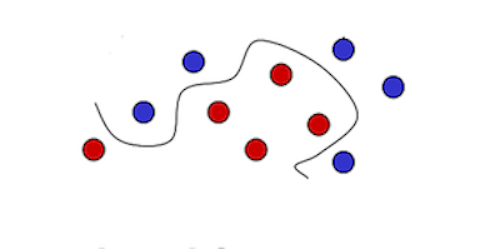
Machine learning entered theoretical computer science in the 1980s with the work of Leslie Valiant on “Probably Approximately Correct” (PAC) learning, building on earlier work of Vapnik and others in statistics, but adding computational complexity aspects. Quantum Computing started in the 1980s as well (Manin, Feynman, Benioff, Deutsch). Both were very successful and naturally combined giving rise to Quantum Machine Learning. Early work in quantum machine learning was focused on speeding up linear algebra subroutines, commonly used in ML. Our research in this field started in 2017 with the study of quantum methods for classifications based on the definition of quantum kernels for fault-tolerant, error-corrected devices and provable end-to-end speedups. The focus of our reserach is mainly on
-
Quantum kernel methods for graph-structured data and applications to problems in finance, bioinformatics and anomaly detection.
-
Quantum Data Encoding: Encoding and processing classical data in quantum systems — feature maps, data-loading strategies, and embeddings.
-
Variational Quantum Algorithms (also known as quantum neural networks for marketing reasons) and their application to classification problems. The main challenge lies in the overwhelming power of classical deep neural networks and the limitations of VQA stemming from the barren plateau problem and the linearity of quantum system dynamics.
Quantum optimization & Applications
Our research focuses on the study of quantum algorithms for combinatorial optimization, portfolio optimization, and logistics problems based on Variational Quantum Algorithms such as QAOA, and other hybrid quantum-classical optimization methods for near-term devices.
Publications
2026
- Nicola Assolini, Alessandra Di Pierro, Isabella Mastroeni. Challenges in Quantum Programs Analysis, International Journal on Software Tools for Technology Transfer, doi: https://doi.org/10.1007/s10009-026-00845-1}, eprint: https://rdcu.be/e80px.
- Francesco Martini, Daniele Lizzio Bosco, Carlo Barbanera, Serena Bernardini, Giacomo Ranieri, Francesca Cibrario, Davide Corbelletto, Giuseppe Bruno, Alessandra Di Pierro, and Luca Dellantonio. Securities Transaction Settlement Optimization on superconducting quantum devices. Journal of Economic Dynamics and Control, doi: 10.1016/j.jedc.2026.105384
2025
- Nicola Assolini, Alessandra Di Pierro, Isabella Mastroeni. A Static Analysis of Entanglement, VMCAI 2025, doi: https://doi.org/10.1007/978-3-031-82703-7_3
- Nicola Assolini and Alessandra Di Pierro. A Denotational Semantics for Quantum Loops. 2025. arXiv: 2506.23320 [cs.PL]. Available at https://arxiv.org/abs/2506.23320.
- Nicola Assolini and Luca Marzari and Isabella Mastroeni and Alessandra di Pierro. Formal Verification of Variational Quantum Circuits. 2025. arXiv: 2507.10635 [quant-ph]. Available at https://arxiv.org/abs/2507.10635.
- Francesco Martini, Daniele Lizzio Bosco, Carlo Barbanera, Serena Bernardini, Giacomo Ranieri, Francesca Cibrario, Davide Corbelletto, Giuseppe Bruno, Alessandra Di Pierro, Luca Dellantonio}. Securities Transaction Settlement Optimization on superconducting quantum devices. 2025. arXiv:2501.08794.
2024
- Hoffmann M., …, Di Pierro, A., Baumbach, J., List, M., Blumenthal, DB. Network medicine-based epistasis detection in complex diseases: ready for quantum computing (2023). Available at https://www.medrxiv.org/content/10.1101/2023.11.07.23298205v1
- Incudini M., Lizzio Bosco, D., Martini, M., Grossi, M., Serra, G., Di Pierro, A. Automatic and effective discovery of quantum kernels (2023) Available at https://arxiv.org/abs/2209.11144
- Incudini M., Martini F., Di Pierro A. Toward useful quantum kernels. Advanced Quantum Technologies, doi: [https://doi.org/10.1002/qute.202300298].
- Assolini N., Di Pierro A., Mastroeni I. Abstracting entanglement, doi: https://doi.org/10.1145/3689609.3689998
- Assolini N., Di Pierro A., Mastroeni I. Static analysis of quantum programs, doi: https://doi.org/10.1007/978-3-031-74776-2_1
2023
- Di Marcantonio, F., Incudini, M., Tezza, D., & Grossi, M. (2023). Quantum Advantage Seeker with Kernels (QuASK): a software framework to speed up the research in quantum machine learning. Quantum Machine Intelligence, 5(20).
- Incudini, M., Grossi, M., Ceschini, A., Mandarino, A., Panella, M., Vallecorsa, S., & Windridge, D. (2023). Resource saving via ensemble techniques for quantum neural networks. arXiv preprint arXiv:2303.11283.
2022
- Incudini, M., Grossi, M., Mandarino, A., Vallecorsa, S., Di Pierro, A., & Windridge, D. (2022). The Quantum Path Kernel: a Generalized Quantum Neural Tangent Kernel for Deep Quantum Machine Learning. arXiv preprint arXiv:2212.11826.
- Incudini, M., Martini, F., & Di Pierro, A. (2022). Structure Learning of Quantum Embeddings. arXiv preprint arXiv:2209.11144.
- Incudini, M., Tarocco, F., Mengoni, R., Di Pierro, A., & Mandarino, A. (2022). Computing graph edit distance on quantum devices. Quantum Machine Intelligence, 4(2), 1-21.
2021
- Di Pierro, A., & Incudini, M. (2021). Quantum Machine Learning and Fraud Detection. In Protocols, Strands, and Logic (pp. 139-155). Springer, Cham.
- Mengoni, R., Incudini, M., & Di Pierro, A. (2021). Facial expression recognition on a quantum computer. Quantum Machine Intelligence, 3(1), 1-11.
2020
- Mengoni, R., Di Pierro, A., Memarzadeh, L., & Mancini, S. (2020). Persistent homology analysis of multiqubit entanglement. Quantum Information and Computation, 20(5&6), 375-399.
- S. Guerrini, S. Martini, A. Masini: Quantum Turing Machines: Computations and Measurements, Appl. Sci. 2020, 10(16), 5551; https://doi.org/10.3390/app10165551
2019
- Mengoni, R., & Di Pierro, A. (2019). Kernel methods in quantum machine learning. Quantum Machine Intelligence, 1(3), 65-71.
- Masini, A., & Zorzi, M. (2019). A logic for quantum register measurements. Axioms 8.1.
- Zorzi, M. (2019). Quantum Calculi—From Theory to Language Design. Applied Sciences 9.24.
- Paolini, L., Piccolo M., & Zorzi M. (2019). QPCF: higher-order languages and quantum circuits. Journal of Automated Reasoning 63.
2018
- Windridge, D., Mengoni, R., & Nagarajan, R. (2018). Quantum error-correcting output codes. International Journal of Quantum Information, 16(08), 1840003.
- Di Pierro, A., Mancini, S., Memarzadeh, L., & Mengoni, R. (2018). Homological analysis of multi-qubit entanglement. EPL (Europhysics Letters), 123(3), 30006.
- Bottarelli, L., Bicego, M., Denitto, M., Di Pierro, A., Farinelli, A., & Mengoni, R. (2018). Biclustering with a quantum annealer. Soft Computing, 22(18), 6247-6260.
2017
- Pierro, A. D., Mengoni, R., Nagarajan, R., & Windridge, D. (2017, December). Hamming Distance Kernelisation via Topological Quantum Computation. In International Conference on Theory and Practice of Natural Computing (pp. 269-280). Springer, Cham.
Members
Internal members
- Alessandra Di Pierro (Prof - alessandra.dipierro@univr.it)
- Claudia Daffara (Prof - claudia.daffara@univr.it)
- Manuel Padovani (Researcher)
- Linda Zampieri (PhD)
External members
Former members
- Riccardo Mengoni (PhD)
- Francesco Martini (PhD)
- Giacomo Campagnari (PhD)
- Massimiliano Incudini (PhD)
- Nicola Assolini (PhD)
Events
EQAI 2026
5th European Summer School on Quantum AI
31 August – 04 September, 2026
Lignano Sabbiadoro, Italy
QTML 2026
10th International Conference on Quantum Techniques in Machine Learning
Bridging Quantum Computing and Machine Learning
December 6 - 11, 2026
Jan Mouton Learning Centre, Stellenbosch University, South Africa
WQS 2026
5th Workshop on Quantum Software
12 December, 2026
Jan Mouton Learning Centre, Stellenbosch University, South Africa
Quilab Workshop - 7th June 2023
Department of Computer Science Strada le Grazie 15 37134 Verona
Contact
How to reach us
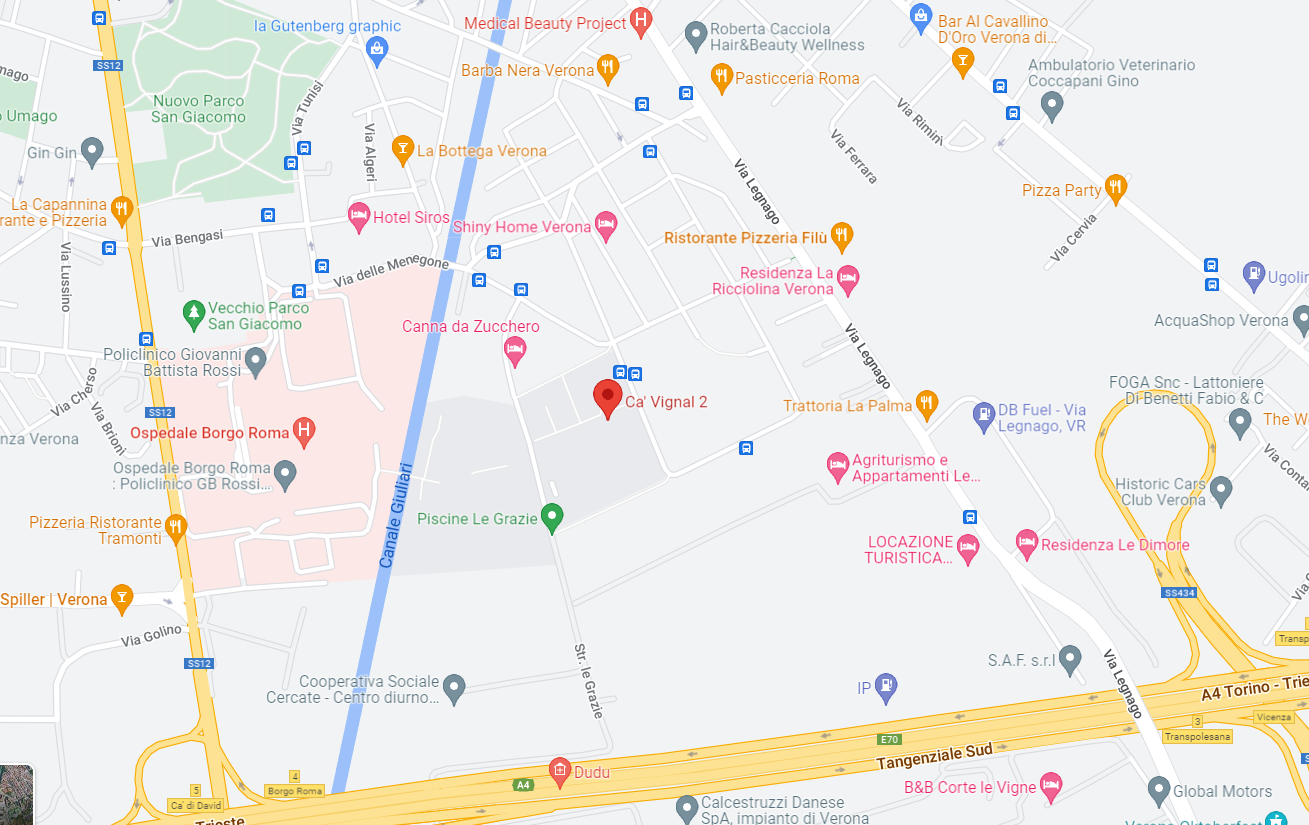
QUILAB is hosted at the University of Verona, Department of Computer Science:
Università degli Studi di Verona - Dip. Informatica - Ca’ Vignal 2
Strada le Grazie, 15
37134, Verona (VR)
Italy
About this website
This website is hosted on Github Pages.